

What’s Really Going on With Your Teeth at Night
Waking up with a dull headache and a tight jaw leaves you wondering what went wrong during your sleep. For many people, teeth grinding is the unseen cause. It often happens without any awareness at all, leaving you with lingering discomfort and unexplained dental wear.
If you’ve been waking up with jaw discomfort or noticing changes in your teeth, there’s a good chance grinding could be playing a role. The good news is that once it’s identified, we have straightforward ways to protect your teeth and feel better each morning.
What Teeth Grinding Actually Is
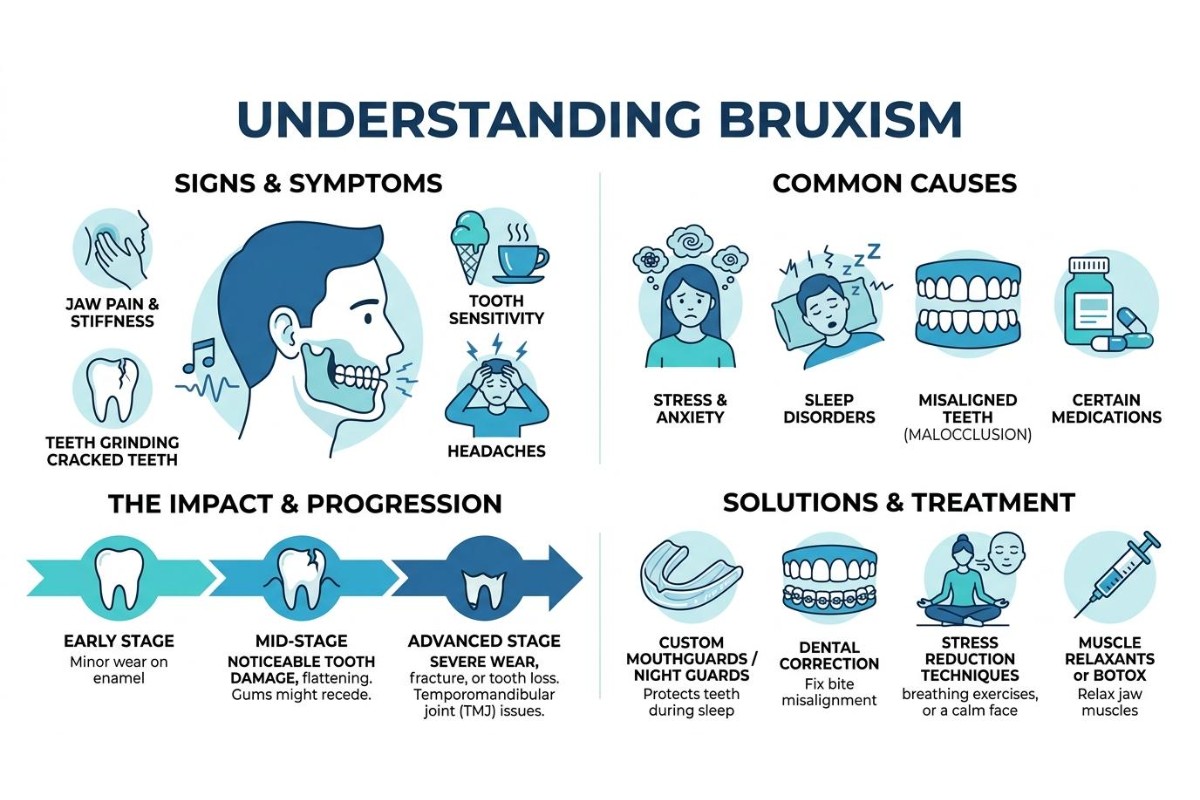
Teeth grinding, also called bruxism, comes in two main forms:
- Daytime clenching: Notice your jaw tightening when you feel stressed, focused, or stuck in traffic.
- Nighttime grinding: This happens while you sleep. You have no control over it and no memory of doing it.
Nighttime grinding tends to be harder to catch. You might not know it’s happening until a partner mentions the sound or your dentist spots wear on your teeth during a routine visit.
Why It Happens
Stress is one of the most common triggers, but it’s not the only one. Watch for sleep disruptions, anxiety, and even a misaligned bite. Children can grind their teeth too, especially during periods of growth or stress at school.
Signs That You Might Be Grinding Your Teeth
Some signs show up before you even get out of bed. Pay attention to how your mouth and head feel each morning. A few things worth watching for include:
- Waking up with a sore or stiff jaw
- Morning headaches, especially around the temples
- Teeth that look flatter, worn down, or chipped
- Increased sensitivity to hot or cold drinks or food
Pay attention to tooth sensitivity that comes on gradually. Enamel wear from habits like grinding can cause teeth to respond to temperature and pressure over time.
Sometimes the first person to notice a grinding habit isn’t the one doing it. Listen to your partner if they hear a low grinding or clicking sound while you sleep. They might also notice that you seem restless during the night. If someone close to you has mentioned either of these things, it’s worth bringing up at your next dental appointment.
What Happens If Grinding Goes Untreated
Every time you grind, you wear away a thin layer of enamel. Enamel doesn’t grow back, so once it’s gone, your teeth become more vulnerable. Over time, grinding can lead to cracked or fractured teeth, which often need more involved restorative dentistry to fix.
The jaw joint takes a lot of pressure during grinding, and that pressure adds up. You might notice tightness or discomfort in your jaw that doesn’t go away on its own. Address this tension before it spreads into your neck and face, making daily life more uncomfortable than it needs to be.
How a Night Guard Can Help
A night guard sits between your upper and lower teeth while you sleep. It acts as a buffer so your teeth aren’t making direct contact with each other. This helps reduce pressure on your jaw and protects your enamel from further wear.
Custom vs. Store-Bought Options
You’ve probably seen night guards at the pharmacy, and while they’re better than nothing, they don’t offer the same level of protection as a custom fit. A custom guard is made from a mould of your teeth, so it fits comfortably and stays in place throughout the night. A dental professional can assess your situation and recommend whether a custom guard makes sense for you.
When to Talk to a Dentist About Grinding
Not every sore jaw is a reason for concern, but some patterns are worth looking into. It’s a good idea to bring it up with a dental professional if you’re experiencing:
- Symptoms that show up more than a few times a week
- Noticeable tooth wear spotted during a Toronto teeth cleaning appointment
- Jaw pain or headaches that get in the way of your day
During a regular exam, the dental team looks for wear patterns on your teeth that can point to grinding. This simple, non-invasive assessment gets picked up during a routine visit. Keep your regular checkups to catch these signs early.
Protect Your Smile Today
Don’t let teeth grinding damage your teeth or disrupt your mornings. Address the signs early to help prevent long-term wear and jaw discomfort.
Our experienced team at Arch Dental can evaluate your teeth, identify signs of grinding, and fit you for a custom night guard. Book your visit today and take the first step toward a more comfortable, healthier smile!